Residential Cleaning Services in Seattle for Homes of Every Size
Seattle homes come in every shape imaginable. A compact studio in Capitol Hill lives very differently than a craftsman in Ballard, a townhouse in West Seattle, or a larger family home on the Eastside. That matters when you hire help to keep a place clean. Good residential cleaning is never just about wiping surfaces and vacuuming floors. It is about understanding how people actually live, how quickly clutter builds, where moisture lingers, what pets leave behind, and which corners of a home quietly collect the most grime.
People often picture cleaning services as a luxury reserved for large houses, but that has not matched what I have seen. Smaller homes can be harder to keep up than bigger ones, especially when they have limited storage, busy routines, or work-from-home setups that compress living, eating, and working into the same few hundred square feet. At the same time, large homes create their own challenges. There may be more bathrooms, more floor transitions, more dust on trim and stair rails, and a longer list of spots that nobody notices until they are visibly dirty.
That is why Residential Cleaning Services in Seattle are most useful when they adapt to the size of the home, the habits of the people in it, and the pace of life around it.
What changes from one home size to another
A cleaning plan for a home under 800 square feet should not look identical to one for a 2,500 square foot house. The tools may be similar, but the rhythm is different.
In a smaller home, the issue is usually density. Every object is closer together. A single load of laundry on a chair can make the whole room feel messy. Cooking odors travel faster. Shower moisture lingers. Pet hair shows up everywhere because there are fewer places for it to hide. In that setting, a cleaner has to work carefully and efficiently around furniture, cords, baskets, shoes, and the ordinary overflow of daily life. There is less square footage, but not necessarily less work.
In a mid-sized home, especially one with kids or two adults working full-time, the pressure points are often the kitchen, bathrooms, entryways, and shared living areas. These homes usually benefit from a maintenance schedule that keeps the visible mess from turning into deep buildup. When clients say, “I can keep it decent for a week, then it slips,” this is often the category they fall into.
Larger homes bring scale. You may have rooms that are used every day and rooms that are touched only occasionally. Dust settles in upstairs guest rooms, blinds collect a film over time, baseboards along long hallways get ignored, and bathroom grout starts to darken before anyone has the time to address it properly. A good cleaning company knows how to prioritize, so the home feels consistently cared for instead of partially cleaned.
Seattle homes have their own cleaning personality
Seattle’s climate creates a very specific kind of housekeeping challenge. For much of the year, people track in moisture, grit, and fine debris. Entryways take a beating. Mats get damp. Hardwood near doors can dull faster if it is not maintained properly. Window sills and frames pick up condensation, particularly in older homes. Bathrooms with weaker ventilation can develop mildew around the caulk line far sooner than homeowners expect.
Lumenloft Home CleaningProfessional cleaning services for homes and businesses in the Seattle area.
Covering the following areas:
Auburn, WA
Issaquah, WA
Federal Way, WA
Renton, WA
Bellevue, WA
North Bend, WA
Bonney Lake, WA
Snohomish, WA
Covington, WA
Kent, WA
Phone: 253-478-6024
[email protected]
Then there is the urban factor. Homes close to busy streets collect more fine dust than many people realize. If you live near construction, that effect gets stronger. In neighborhoods with older housing stock, you also see quirks such as original trim, narrow staircases, radiators, textured surfaces, and older tile that needs a gentler approach.
This is one reason local experience matters. A cleaner who has worked throughout Seattle knows the difference between a modern condo with engineered floors and an older bungalow with delicate finishes. They know that some homes need extra attention around mudrooms and pet areas, while others need a sharper eye on moisture-prone bathrooms and kitchen grease.
Why many people wait too long to get help
A lot of homeowners and renters call cleaning services after a stressful stretch. Maybe work got busy, family visited, a new baby arrived, a pet started shedding for the season, or the home just reached that tipping point where every room feels slightly behind. By then, the job is no longer simple upkeep. It is catch-up.
That pattern is common, and there is nothing wrong with it, but routine service usually saves money and effort over time. A kitchen cleaned every two weeks tends to stay manageable. A shower scrubbed regularly is much easier than one that has gone months with soap scum hardening on glass and tile. Floors that are vacuumed and damp-mopped on schedule wear better and look better.
The biggest benefit is not visual. It is mental. People often describe the same feeling after a proper cleaning: the house becomes usable again. They can cook without first clearing counters. They can focus in the home office. They can invite someone over without doing a frantic one-hour reset first.
What a well-run residential cleaning service actually does
The phrase “house cleaning” can mean a lot of things, so it helps to be specific. A reliable service usually starts by identifying the scope. Is this a standard recurring cleaning, a deep clean, a move-in or move-out service, or a one-time reset before guests arrive? Each one requires different labor, timing, and expectations.
A standard recurring visit generally focuses on kitchens, bathrooms, floors, dusting, surface wiping, and visible tidying. A deep clean goes further into buildup, neglected edges, grime in corners, and detail work that is not always practical in a maintenance visit. Move-related cleaning is its own category because empty homes reveal everything. Baseboards, appliance gaps, inside cabinets, and window tracks Commercial Cleaning Services Renton suddenly matter much more when there is no furniture to soften the scene.
The strongest teams are not just fast. They are consistent. They notice when the same faucet always spots up, when one bathroom needs extra attention because the fan is weak, or when a client prefers a gentler product on stone counters. That kind of memory separates a generic clean from a service that genuinely supports the household.
Small apartments need strategy, not just speed
People are often surprised to hear that a one-bedroom apartment can be tricky. There is nowhere to hide disorder. Every surface has multiple jobs. The dining table is also a desk. The ottoman opens for storage. The kitchen counter becomes a mail station, coffee bar, and meal prep zone all at once.

In these spaces, the best cleaner works with the layout instead of fighting it. They know how to clean around compact furniture without turning the visit into a constant shuffle. They pay close attention to fingerprints on glossy cabinets, crumbs around the toaster, dust under the bed, and grime that builds in the tiny seams of bathroom fixtures. Because everything is close together, details matter more.
I have seen small homes transformed not by dramatic deep cleaning but by regular, smart maintenance. Once the high-contact areas stay under control, the whole space feels calmer. That is especially true for singles, couples, and remote workers who spend most of the day at home.
Family homes need a different kind of consistency
A family home does not get dirty in a neat, orderly way. It gets lived in. There are snack crumbs in odd places, toothpaste in sinks, wet footprints by the door, smudges on lower walls, and a mysterious sticky patch near the dining chairs that nobody can explain. Add a dog, and now the stair edges are furry too.
These homes benefit from cleaners who understand flow. The kitchen cannot be cleaned as if it were a showroom, because it will be used again in an hour. The goal is restoration, not perfection. Bathrooms need sanitizing and descaling. Floors need to be cleaned with an eye for spills, corners, and traffic patterns. Bedrooms may need lighter touch if they are mostly personal spaces, while common areas need more focused effort.
This is where realistic scheduling makes a big difference. Weekly service can keep a busy household from sliding into constant disorder. Every two weeks works well for many families if they do light pickup in between. Monthly service can be enough for quieter homes, but in active households it often means every visit feels more like a recovery than a reset.
Larger homes benefit from prioritization
With larger homes, one of the biggest mistakes is treating every room as equally urgent. They usually are not. The kitchen, primary bathroom, family room, and entry need frequent attention. A formal dining room or guest bedroom may only need lighter maintenance most visits, with occasional detailed cleaning.
A seasoned cleaning team will often build this kind of prioritization into the visit without making the house feel neglected. They understand how to rotate detail work, so one appointment might focus more on blinds and baseboards in one area, while another spends extra time on buildup in secondary bathrooms. That approach keeps the home feeling evenly maintained without pushing every visit into deep-clean territory.
This also helps with budget. People sometimes assume the only way to clean a large house properly is to spend a great deal every week. Not always. Smart scope management can make a big home feel fresh and controlled without over-servicing low-use spaces.
How to choose the right service for your household
Not every cleaning company is the right fit for every home. Price matters, of course, but reliability, communication, and judgment matter just as much. A cheaper service that misses the same basics every time can be more frustrating than helpful.
Here are a few things worth asking before you book:
- Whether they offer recurring cleaning, deep cleaning, and move-related services
- How they price by home size, condition, and frequency
- Whether they bring supplies and equipment, or expect you to provide them
- How they handle pets, special surfaces, and access instructions
- What happens if you need to reschedule or add extra tasks
Those questions tend to reveal a lot. A professional company should be able to answer clearly, without vague promises. If they seem unsure about what is included, how long the visit takes, or how they adjust for different homes, that usually shows up later in the service.
The difference between recurring service and a deep clean
This is one of the most common misunderstandings. Clients book a standard cleaning but expect deep-clean results, especially if the home has been neglected for a while. That gap causes disappointment on both sides.
A recurring clean is designed to maintain a home that is already in reasonable condition. A deep clean is designed to address buildup and restore neglected areas so that maintenance visits can work afterward. If stovetop grease has baked on for months, shower doors are cloudy, and dust has settled into blinds and baseboards throughout the house, a first-time deep clean is often the smarter starting point.
You can think of it like this. Maintenance keeps a clean home clean. Deep cleaning gets it there in the first place.
Renters, homeowners, and short-term hosts all need something slightly different
Seattle’s housing mix means cleaning companies often serve more than one type of client. Renters tend to need flexible service, especially around lease transitions, smaller spaces, and building access. Homeowners often want consistency and longer-term relationships. Short-term rental hosts need quick turnovers and attention to presentation.
That last group has particularly high standards because guests notice everything. Linens, kitchen counters, bathroom mirrors, hair in corners, fingerprints on appliances, and the general “feel” of freshness all matter. Airbnb Cleaning Services in Seattle usually require tighter scheduling, stronger checklists, and faster response times than ordinary residential service. A missed detail in a short-term rental can lead to a poor review within hours.
At the same time, there is overlap. A company that does strong residential work often develops good habits that carry over into hosting environments: consistency, communication, and an eye for detail. The key is making sure they understand the pacing and expectations of turnover cleaning if that is what you need.
The Eastside and South Seattle bring their own expectations
Cleaning expectations also shift by area. In some homes, the focus is on family practicality. In others, it is presentation, polished surfaces, and preparation for frequent visitors or business use. That is why local companies often end up serving a range of clients beyond traditional houses and apartments.
For example, someone searching for Professional Cleaning in Renton may be balancing a family schedule, commuting, and a home that gets heavy daily use. A client looking for Cleaning Services in Issaquah may care about regular upkeep after muddy soccer practices, rainy school mornings, and full weekends. In both cases, the fundamentals are similar, but the details matter. Entryways, kitchens, and bathrooms usually carry the load.
There is also a practical crossover between home and workplace cleaning. Some providers that handle residences also offer Professional Commercial Cleaning Services in Seattle, especially for small offices, mixed-use properties, or businesses that want a more detail-oriented approach. That does not automatically make them the best residential cleaners, but it can mean they have strong systems, trained crews, and reliable scheduling. The important thing is whether they know how to adjust their methods for a lived-in home, which is far more personal than a commercial space.
What makes a home feel truly clean
People describe a clean home in different ways. Some focus on smell. Others notice the shine on fixtures, the smoothness of the floor under bare feet, or the absence of dust on dark furniture. In practice, a home feels clean when the high-touch surfaces, visual lines, and lived-in zones all come back into balance.
That usually includes clean counters, refreshed bathrooms, dust-free reachable surfaces, floors without grit underfoot, and a kitchen that looks usable rather than crowded. It also includes small details: the front of the microwave, the base around the toilet, the corners where hair collects, the streaks that show on stainless steel, and the crumbs that gather under the lip of the toaster.
A cleaner does not need to make a home look untouched. Most people do not live that way, and frankly, they do not want to. What they want is a space that feels reset, sanitary, and easier to enjoy.
When more cleaning is not the answer
There are cases where frequency alone will not solve the problem. If a home has chronic clutter, too little storage, or a household routine that leaves every surface overloaded, even excellent cleaning may feel temporary. That is not a failure of the cleaners. It is a mismatch between the layout, the habits, and the service level.
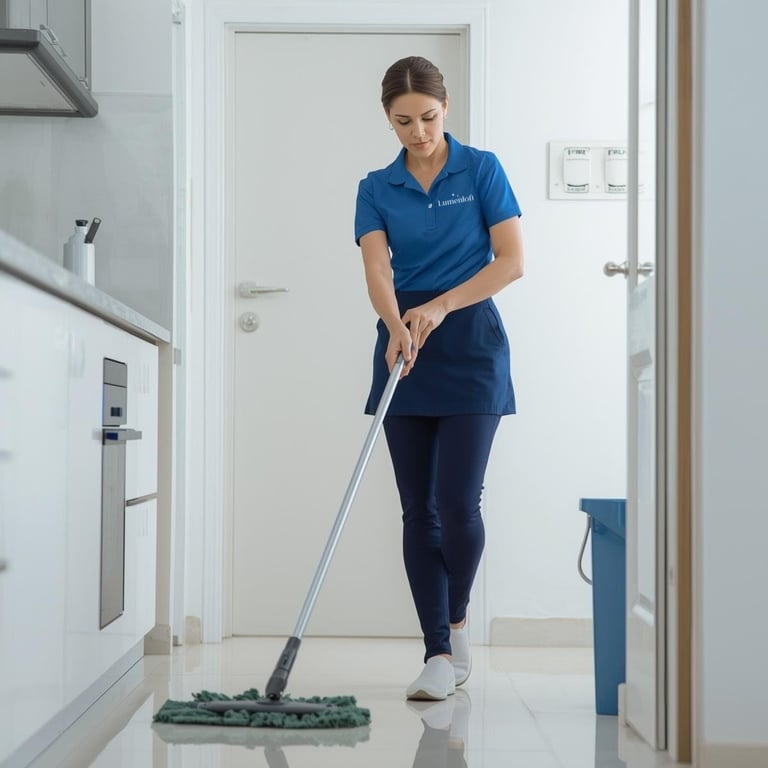
In those situations, a short reset routine between visits helps a lot. Not a major production, just enough to keep the cleaner focused on actual cleaning rather than moving piles around.
A simple between-visit routine usually comes down to:
- Clearing bathroom counters before the cleaning day
- Putting laundry and loose clothes in one designated spot
- Emptying sinks of dishes if kitchen detail is a priority
- Picking up toys, cords, and floor obstacles
- Noting any special requests before the crew arrives
That kind of prep can make a two-hour visit dramatically more effective, especially in smaller homes.
Good service should reduce friction, not create it
The best residential cleaning relationships are surprisingly low drama. The crew arrives when expected, knows the home, communicates clearly, and does not need constant supervision. If something needs special attention, you mention it once and they handle it. If there is a change in schedule, they tell you early. If they notice a problem, such as unusual mildew, a leaking toilet base, or damage under a sink, they flag it.
That operational steadiness matters more than flashy branding. A friendly tone helps. Professionalism helps more. Homes are intimate spaces, and trust is a big part of the value. People are not just paying for labor. They are paying for reliability, discretion, and the relief of knowing one important part of household life is under control.
Finding the right fit for homes of every size
A studio, a townhouse, a family home, and a large multi-level property all need cleaning, but not in the same way and not on the same schedule. The best results come from matching the service to the home’s size, condition, layout, and daily use. That sounds obvious, but it is where a lot of cleaning plans go wrong. They are too generic.
When the fit is right, cleaning service stops feeling like an occasional rescue and starts functioning like support. The apartment stays livable. The family home stops spiraling. The larger house stays comfortable without demanding a whole weekend of work. And the people living there get back time, energy, and a home that feels better to walk into at the end of the day.
For Seattle households, that kind of practical help goes a long way. Rainy seasons, busy schedules, pets, kids, guests, and small domestic chaos are not going anywhere. A smart, consistent cleaning service makes all of it easier to manage, whether the home has one room or ten.